
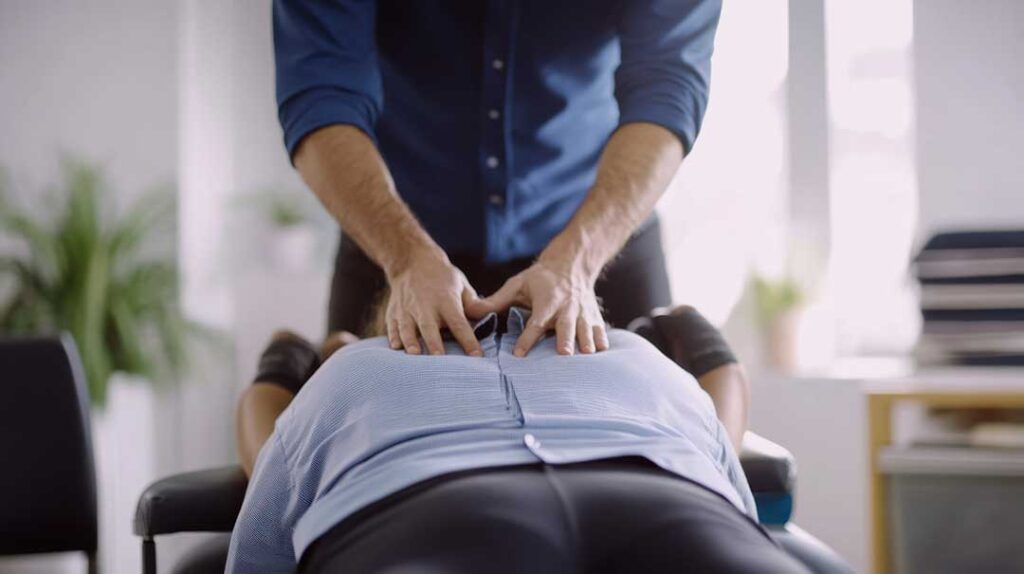
Golf depends on coordinated movement through the feet, hips, spine, shoulders, and arms. When one area becomes stiff or painful, the body may compensate elsewhere, affecting balance, swing mechanics, endurance, and confidence.
Chiropractic care may support a golfer’s physical function, particularly when treatment is combined with strengthening, mobility work, sound swing instruction, and sensible training habits. It should not be viewed as a shortcut to lower scores or a replacement for medical evaluation when symptoms are severe or unexplained.
Can chiropractic care directly improve a golf swing?
Chiropractic care does not automatically improve club selection, swing path, timing, or putting technique. Those skills depend primarily on practice, instruction, coordination, and golf-specific conditioning.
However, treatment directed at musculoskeletal problems may help some golfers move more comfortably. A golfer with restricted hip motion, stiff upper-back rotation, or activity-related low-back pain may alter the swing to avoid discomfort. Improving movement tolerance can make it easier to practice and maintain a more repeatable motion.
Research on golf-related back pain consistently points to the importance of trunk control, hip mobility, pelvic movement, and rotational mechanics. The lower back is exposed to substantial force during the swing, especially when the hips and upper back do not contribute effectively to rotation. ([pubmed.ncbi.nlm.nih.gov](https://pubmed.ncbi.nlm.nih.gov/38446499/?utm_source=openai))
The realistic goal is usually not “more power from an adjustment.” It is better movement, less irritation, and a safer return to practice or play.
What problems might chiropractic care address?
Chiropractic assessment commonly focuses on the spine and other joints, as well as the surrounding muscles and movement patterns. For golfers, relevant concerns may include:
- Low-back stiffness after a round
- Pain with rotation or the follow-through
- Limited hip or upper-back mobility
- Neck and shoulder tension
- Discomfort from prolonged standing or walking
- Recurrent soreness after increasing practice volume
- Joint or muscle symptoms that affect balance and posture
Spinal manipulation is one of several conservative options that may provide mild-to-moderate relief for some types of low-back pain. Evidence does not show that it is superior for every person, and outcomes vary according to the cause, duration, and severity of symptoms. Exercise, education, physical therapy, medication when appropriate, and activity modification may also be useful. ([nccih.nih.gov](https://www.nccih.nih.gov/health/spinal-manipulation-what-you-need-to-know?utm_source=openai))
A careful evaluation should consider whether the problem is coming from the back, hip, pelvis, shoulder, or another structure. Treating the painful area alone may not address the movement pattern that contributed to the problem.
How could better mobility affect the swing?
A golf swing requires rotation while the lower body remains stable enough to transfer force. If the hips or upper back are limited, a golfer may rotate excessively through the lumbar spine, which is designed more for stability than large repeated twisting movements.
Improved mobility may help a golfer:
- Rotate through the hips and upper back rather than forcing the low back
- Maintain balance during the backswing and follow-through
- Reduce guarding caused by pain or stiffness
- Reach a more comfortable address position
- Walk and stand longer during a round
- Practice without repeatedly aggravating the same area
Mobility is only one part of performance. Adequate strength, particularly in the hips, legs, trunk, and shoulder-supporting muscles, helps the body control rotation. A golfer who stretches frequently but lacks strength or coordination may still struggle with fatigue and inconsistent mechanics.
What should golfers expect during an evaluation?
A useful evaluation should connect symptoms to real golfing demands rather than focus only on a static posture. Questions may include:
- When does the pain begin: setup, backswing, impact, or follow-through?
- Does walking nine or eighteen holes change the symptoms?
- Has practice volume recently increased?
- Is the pain worse after winter inactivity?
- Are there symptoms during daily activities, such as sitting, lifting, or sleeping?
- Has a previous injury changed the way the golfer swings?
Movement testing may include the spine, hips, shoulders, balance, and basic strength. The purpose is to identify limitations that can be addressed safely and to determine whether further medical evaluation is needed.
Treatment may involve manual techniques, mobility exercises, strengthening, posture or movement education, and guidance on returning to activity. A golf-specific plan should progress gradually rather than assume that pain relief means the body is ready for a full round.

Can chiropractic care prevent golf injuries?
No treatment can guarantee injury prevention. Chiropractic care may be one part of a broader strategy, but injury risk is also influenced by training load, swing mechanics, physical conditioning, age, previous injuries, equipment, sleep, and recovery.
A practical prevention routine includes:
- Walking for several minutes before practicing or playing
- Performing gentle hip, trunk, and shoulder movements before full swings
- Starting with short irons and gradually progressing to longer clubs
- Avoiding a sudden increase from little winter activity to repeated full-power swings
- Building leg, hip, and trunk strength during the off-season
- Taking brief breaks during extended practice sessions
- Stopping or modifying an activity when pain becomes sharp, radiating, or progressively worse
For residents who play during the warmer months and spend much of winter less active, the first rounds of the season can create a sudden workload increase. A few weeks of progressive walking, mobility work, and strength training before regular play may be more useful than trying to regain conditioning during a single weekend.
What exercises are commonly useful for golfers?
The right exercises depend on the individual, but many golfers benefit from training that improves movement in several areas:
Hip mobility: Controlled hip rotations, lunges, and gentle stretching can support a stable lower-body base.
Upper-back rotation: Exercises performed on the side or in a hands-and-knees position may help develop thoracic mobility without forcing the low back to twist.
Trunk strength: Planks, carries, and controlled anti-rotation exercises teach the trunk to resist unwanted movement while the hips and shoulders rotate.
Leg strength and balance: Squats, step-ups, split-stance exercises, and single-leg balance work help with ground force, stability, and walking endurance.
Exercises should be comfortable and performed with controlled technique. Pain that travels into the leg or arm, causes numbness, or produces weakness is not a normal stretching response.
When is back pain a reason to pause golf?
A golfer should stop playing and seek prompt medical assessment for severe or rapidly worsening pain, significant weakness, loss of bladder or bowel control, numbness in the groin region, fever, unexplained weight loss, or pain following major trauma.
Persistent pain also deserves evaluation when it does not improve with reasonable activity modification, interferes with sleep, or repeatedly returns every time practice resumes. These patterns may indicate a condition requiring a broader diagnostic approach.
Chiropractic care can be appropriate for some mechanical musculoskeletal complaints, but it is not suitable for every cause of back, neck, shoulder, or hip pain. The safest approach is individualized care that combines symptom assessment, progressive exercise, sensible golf volume, and attention to swing mechanics.
What is the most realistic benefit for a golfer?
The most realistic benefit is improved comfort and movement capacity, not a guaranteed lower handicap. If treatment helps a golfer move with less pain, restore restricted mobility, and follow a progressive conditioning plan, practice may become more consistent and the swing may feel less forced.
That benefit is most likely when chiropractic care is treated as one element of a complete golf-health plan—alongside strength training, warm-up habits, appropriate recovery, and instruction that addresses technique.
